INSIGHT FOR ACTION
A community-wide effort to understand homelessness, guide resources, and build real solutions across Linn, Benton, and Lincoln counties.
The PIT Count impacts local, regional, and state funding for housing and more. Learn more about why the PIT matters.
While CSC and our regional partners coordinate the count, it is a volunteer-led efforts. Community support is vital!
PIT data tells a uniquely strong story about housing and homelessness in our region over time.
The Point-in-Time (PIT) Count is an annual, federally mandated effort that provides a snapshot of homelessness on a specific date in January. In our region, this work is coordinated by CSC in partnership with the Oregon Community Continuum of Care (Balance of State CoC)—a network that connects local agencies, service providers, and state partners to ensure consistent data collection and resource planning.
This count, required by the U.S. Department of Housing & Urban Development (HUD), records people living without permanent housing in Linn, Benton, and Lincoln Counties. While this effort is only a snapshot of regional homelessness and may miss individuals—especially in rural areas—the data remains vital for guiding funding decisions, shaping housing strategies, and informing community action.
The PIT Count doesn’t just tally numbers—it helps communities understand where people experiencing homelessness are staying and what resources they need most.

People staying in temporary housing like emergency shelters, transitional housing, or hotel rooms paid for by assistance programs.

People sleeping in places not meant for living—such as cars, tents, parks, or abandoned buildings.
The data we collect is required by federal and state agencies to release money for housing, shelters, and support programs. Without it, our region could lose critical funding.
The count tells us how many people are experiencing homelessness, where they are, and how those numbers change over time. This helps us respond to new challenges and measure progress.
Local leaders and service providers use PIT data to design programs that meet real needs—like adding emergency beds or creating long-term housing plans.
The count brings volunteers, nonprofits, and agencies together. It also gives us the facts we need to educate the public and advocate for lasting change.
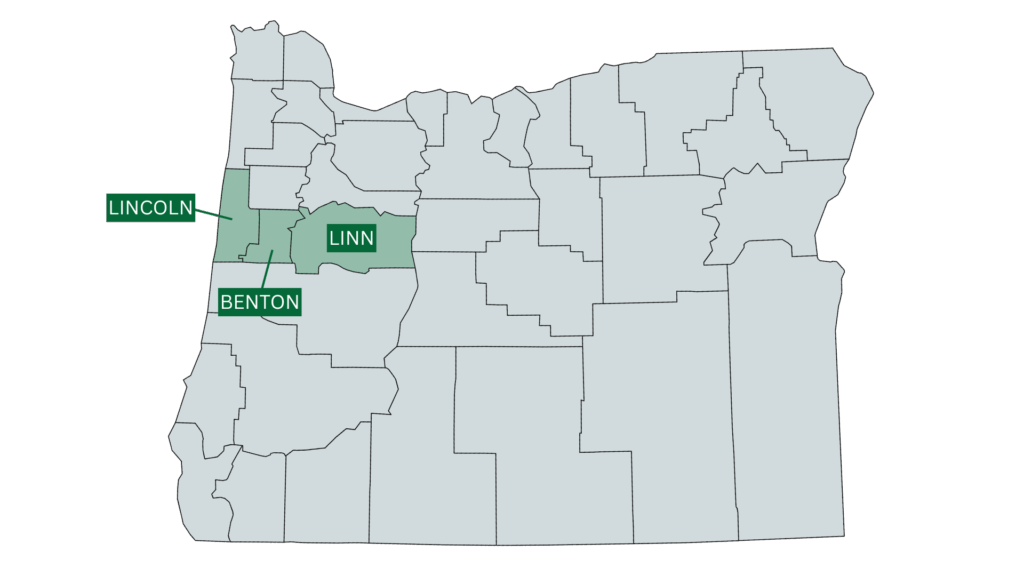
CSC coordinates the PIT Count across Linn, Benton, and Lincoln Counties in Oregon, covering both urban centers and rural communities. We support a comprehensive regional effort to better understand and address homelessness across all three counties.
CSC coordinates the PIT Count across Linn, Benton, and Lincoln Counties in Oregon, covering both urban centers and rural communities. We support a comprehensive regional effort to better understand and address homelessness across all three counties.



The Point-in-Time Count is a community-wide, multi-day effort to capture data about who is experiencing homelessness on one night in January. Volunteers are essential to making this happen. This year, we’re seeking volunteers experienced in working with unhoused individuals and/or outreach with the public.
Community Connectors
Health & Wellness Providers
Community Care Advocates
Complete the Registration to sign up as a volunteer
Your regional PIT Lead will review your application and confirm approval for training
Complete the self-guided training on the CSC website and follow any extra instructions from your PIT Lead
After training, contact your PIT Lead for final approval and next steps
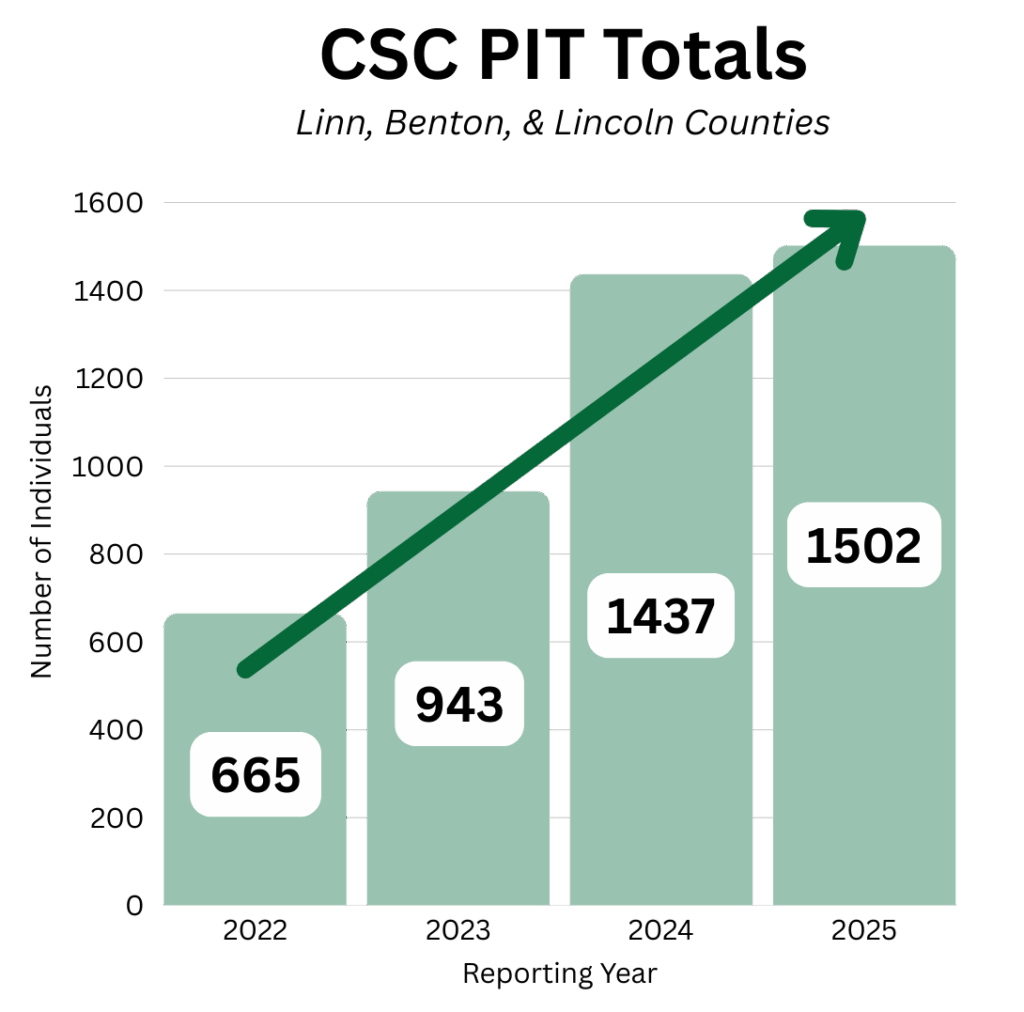
This chart shows more than totals—it tells a story of both progress and crisis. From 665 individuals in 2022 to more than 1,500 in 2025, these numbers reflect our success in reaching people and the growing homelessness crisis in our region. Numbers rise because of systemic conditions—and because we’ve expanded our capacity to find and serve those in need.
But these numbers are only part of the story. Our data is imperfect because the process is imperfect, yet it remains essential. This reporting system helps us identify service gaps and trends, even when surveys are incomplete. State and national reports often discard incomplete surveys, but we keep them because every voice matters. That means our numbers may not match theirs, but they reflect the reality we see every day.
Here’s what we know: youth and seniors are experiencing homelessness at alarming rates. These are not faceless statistics—they are students trying to finish school, older adults without healthcare or support systems, and families navigating impossible choices.
The consequences of homelessness go far beyond visible hardship. It erodes community trust, threatens public health, and diminishes hope for the future. People who are unhoused face immense trauma, malnutrition, serious illness, and higher risks of substance use disorders, mental health conditions, and shortened life spans.
Experiencing homelessness is not a moral failing. It’s the result of systemic barriers—housing costs, economic stress, health challenges—that push people into crisis. To address this, we must understand the scope of the problem. That’s why this reporting, while imperfect, is so vital.
Every person deserves dignity, safety, and a place to call home.